


⏲️ Estimated reading time: 8 min
Table of Contents
The 2026 FIFA World Cup is set to become the richest tournament in football history. Discover how FIFA’s record-breaking prize money is distributed, how much each team earns, what the champions receive, and why the expanded 48-team format is transforming global football.
The Biggest Prize Pool in FIFA World Cup History
The 2026 FIFA World Cup is making history in more ways than one. Not only is it the first tournament featuring 48 national teams, but it also offers the largest financial rewards ever seen in international football.
FIFA has significantly increased its tournament revenues thanks to expanded broadcasting rights, sponsorship agreements, commercial partnerships, hospitality packages, and ticket sales. As a result, participating nations are competing for an unprecedented amount of prize money.
For football fans, this means even greater competition. For national federations, the financial rewards can help transform youth academies, infrastructure, coaching systems, and long-term development.
Why FIFA Increased the Prize Money
Several major factors contributed to the record prize fund.
Expansion to 48 Teams
The World Cup now welcomes 48 nations instead of 32, increasing global participation while creating more matches and generating additional revenue.
The tournament now includes:
- 48 qualified nations
- 104 total matches
- Three host countries
- Millions of additional ticket sales
- Higher worldwide television audiences
More participating countries naturally required a much larger financial distribution.
Record Commercial Revenue
FIFA has reported record income generated through:
- Television broadcasting rights
- Global sponsors
- Official partners
- Licensing
- Hospitality experiences
- Digital media
- Merchandise
Every new revenue stream contributes to larger payouts for participating nations.
Estimated Total Prize Pool
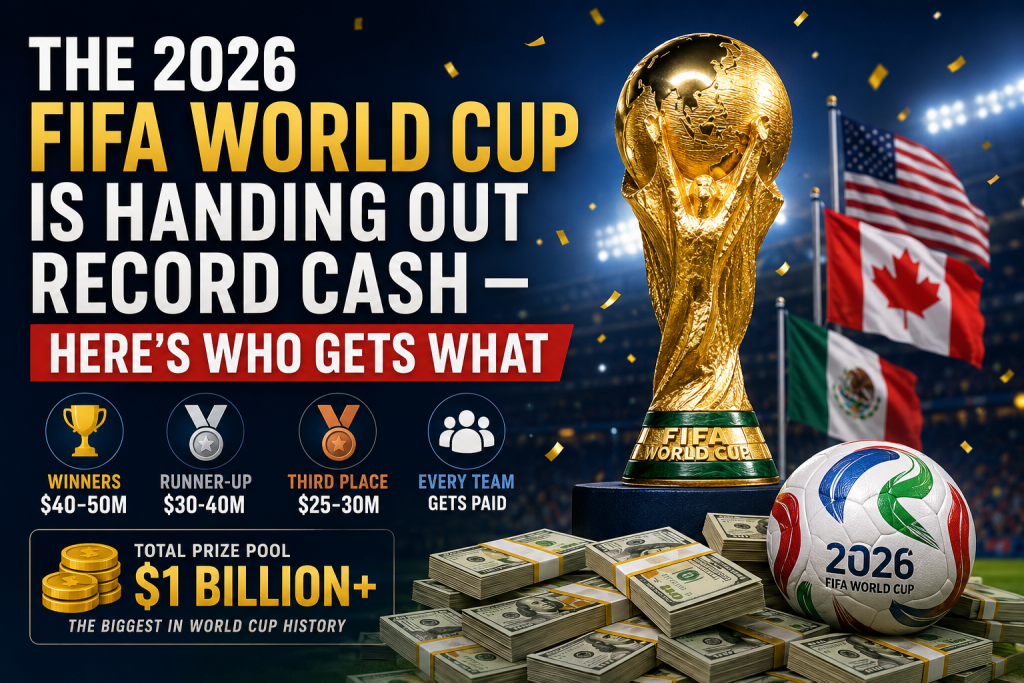
Although final numbers continue to be confirmed by FIFA, industry estimates place the 2026 FIFA World Cup prize fund at over $1 billion, making it the richest competition in football history.
The prize money includes:
- Team participation payments
- Performance bonuses
- Knockout-stage rewards
- Champion bonuses
- Club compensation
- Player insurance programs
Every Team Gets Paid
One of the biggest changes in modern World Cups is that every qualified nation earns money, regardless of results.
Simply qualifying for the tournament guarantees a significant financial reward.
Benefits include:
- Travel funding
- Accommodation
- Training facilities
- Operational expenses
- Tournament participation payment
For many developing football nations, qualifying alone provides years of federation funding.
Estimated Prize Money Breakdown
While FIFA may slightly adjust final figures, analysts expect a distribution similar to the following.
Champions
Estimated earnings:
Approximately $40–50 million
The winning federation also receives:
- FIFA World Cup Trophy
- Gold medals
- Global recognition
- Commercial opportunities
- Increased sponsorship value
Runner-Up
Estimated earnings:
Around $30–40 million
The second-place nation receives substantial financial compensation while remaining one of the world’s elite football teams.
Third Place
Estimated earnings:
Around $25–30 million
Winning the third-place playoff remains financially rewarding.
Fourth Place
Estimated earnings:
Approximately $20–25 million
Even missing the podium brings significant financial returns.
Quarterfinalists
Teams reaching the quarterfinals are expected to receive:
Approximately $15–20 million
Round of 16 Teams
Countries eliminated in the Round of 16 could receive:
Around $10–15 million
Group Stage Teams
Even nations eliminated during the group phase are expected to earn several million dollars simply for participating.
How Much Does the Winning Federation Actually Keep?
Many fans assume players receive the entire prize.
That isn’t how FIFA operates.
The prize money is awarded to the national football federation, which then decides how funds are allocated.
Typical spending includes:
- Player bonuses
- Coaching staff bonuses
- Youth football
- Women’s football
- Stadium improvements
- Grassroots development
- Administrative costs
Every federation follows its own distribution policies.
Player Bonuses
Most national teams negotiate bonus agreements before the tournament begins.
These agreements often include bonuses for:
- Qualification
- Group-stage victories
- Advancing to knockout rounds
- Winning the tournament
Some star players voluntarily donate portions of their bonuses to football development projects.
Smaller Nations Benefit the Most
For traditional football giants like:
- Brazil
- Germany
- Argentina
- Spain
- England
- France
Prize money represents only part of their annual football income.
However, for emerging football nations, World Cup earnings can completely transform the future of the sport.
Funding may be invested in:
- New stadiums
- Training centres
- Youth academies
- Women’s football
- Coach education
- Medical facilities
- Scouting networks
Club Compensation
National federations are not the only organizations receiving money.
FIFA also compensates professional clubs whose players participate in the World Cup.
This Club Benefits Programme rewards teams for releasing players during the tournament.
Thousands of clubs worldwide receive compensation depending on:
- Number of players
- Length of participation
- Tournament progression
Even smaller clubs can benefit financially when former academy graduates reach the World Cup.
Insurance Protection
FIFA also funds extensive insurance programs covering players throughout the tournament.
Coverage includes:
- Serious injuries
- Medical treatment
- Compensation for clubs
- Rehabilitation support
This reduces financial risks for professional clubs that release elite players.
The Economic Impact Beyond Prize Money
Prize money represents only one part of the tournament’s financial impact.
Players often see increased:
- Transfer values
- Sponsorship deals
- Endorsement contracts
- Shirt sales
- Social media growth
National teams also experience increased commercial opportunities after successful tournaments.
How Hosting Countries Benefit
The United States, Canada, and Mexico are expected to generate billions through:
- Tourism
- Hotels
- Restaurants
- Transportation
- Retail
- Entertainment
- Infrastructure investment
Although hosting costs are significant, the long-term economic benefits can extend for years.
Why the Expanded Tournament Matters
The move from 32 to 48 teams creates opportunities for countries that previously struggled to qualify.
Benefits include:
- Greater global representation
- Increased competitive balance
- More football investment worldwide
- Development of emerging nations
- Expanded fan engagement
The additional prize money reinforces these goals by providing meaningful financial support to a wider range of football federations.
Could Prize Money Continue to Grow?
Almost certainly. Football remains the world’s most popular sport, and FIFA’s commercial revenues continue to rise.
Future World Cups could see even larger prize funds as:
- Global audiences increase
- Streaming platforms expand
- Sponsorship values rise
- International broadcasting deals grow
Many analysts expect future tournaments to surpass today’s record payouts.
What This Means for Fans
For supporters, higher prize money creates even greater motivation for every participating nation.
Teams now compete not only for football glory but also for financial rewards that can shape the future of their national programs for years to come.
The result is a more competitive tournament where every match matters.
Frequently Asked Questions
How much prize money does the World Cup winner receive?
The champion is expected to receive around $40–50 million, although FIFA confirms the official figures before and during the tournament.
Does every team receive prize money?
Yes. Every qualified nation receives financial compensation simply for participating.
Who receives the money?
The national football federation receives the prize money and distributes it according to its own policies.
Do players receive bonuses?
Usually yes. Most federations negotiate player bonuses before the tournament begins.
Why is the 2026 prize pool so large?
The expanded 48-team tournament generates significantly higher commercial revenue from broadcasting, sponsorships, ticket sales, and hospitality.
Do football clubs receive compensation?
Yes. FIFA’s Club Benefits Programme compensates clubs that release players for the World Cup.
Is this the biggest prize fund in World Cup history?
Yes. The 2026 FIFA World Cup features the largest financial rewards ever offered by FIFA.
Does prize money help smaller football nations?
Absolutely. For many developing federations, World Cup earnings fund infrastructure, coaching, youth academies, and long-term football development.
Will future World Cups offer even more money?
Many analysts believe future tournaments could feature even larger prize funds as football revenues continue to grow worldwide.
Does winning the World Cup increase player value?
In many cases, yes. Strong performances often lead to higher transfer fees, sponsorship deals, and commercial opportunities.
Final Whistle
The 2026 FIFA World Cup is redefining the financial landscape of international football. With an expanded field of 48 teams and a record-breaking prize fund expected to exceed $1 billion, every stage of the tournament carries enormous sporting and economic significance.
For powerhouse nations, the rewards reinforce already successful football programs. For emerging countries, the prize money can reshape the future of the sport by funding infrastructure, coaching, and youth development. Beyond the trophies, medals, and unforgettable moments on the pitch, the tournament leaves a lasting financial legacy that extends far beyond the final whistle.
You may also be interested in: Top Famous Restaurants in Amsterdam You Must Visit
⚠️ Disclaimer and Source Hygiene
This article is intended for informational purposes only. Prize money figures are based on FIFA announcements, industry estimates, and publicly available reports. Official distributions may be updated by FIFA before or after the tournament. Always refer to FIFA’s official publications for confirmed financial information.
🔔 For more tutorials like this, consider subscribing to our blog.
📩 Do you have questions or suggestions? Leave a comment or contact us!
🏷️ Tags: 2026 FIFA World Cup, FIFA World Cup Prize Money, World Cup 2026, FIFA Cash Prize, Football Prize Money, World Cup Winner Prize, FIFA Tournament, Soccer News, Football Finance, World Cup Rewards
📢 Hashtags: FIFAWorldCup #WorldCup2026 #FIFA #Football #Soccer #PrizeMoney #Argentina #Spain #FootballNews #SportsBusiness
Sources and References
Primary Sources
- FIFA official financial reports
- FIFA World Cup Regulations
- FIFA Club Benefits Programme documentation
Secondary Sources and Industry Analysis
- Deloitte Sports Business Group
- KPMG Football Benchmark
- Reuters Sports
- Associated Press Sports
- ESPN FC
- BBC Sport
- The Athletic
