


⏲️ Estimated reading time: 8 min
Table of Contents
Learn how to use your air conditioner the right way with the best temperature settings, operating modes, and maintenance tips. Discover how to stay comfortable, reduce electricity costs, improve indoor air quality, and extend the lifespan of your AC unit all year round.
Why Using Your Air Conditioner Correctly Matters
An air conditioner is more than just a cooling device. When used properly, it creates a comfortable indoor environment, improves air quality, reduces humidity, and helps lower energy consumption.
Unfortunately, many people use their AC incorrectly. Setting extremely low temperatures, constantly turning the unit on and off, or forgetting regular maintenance can increase electricity bills while reducing the system’s lifespan.
Learning the correct settings will help you enjoy better comfort while keeping operating costs under control.
The Ideal Temperature During Summer
One of the biggest mistakes people make is setting the air conditioner to the lowest possible temperature.
Many believe that selecting 60°F (16°C) will cool the room faster. In reality, an air conditioner works at a fixed cooling capacity. Choosing a lower temperature only forces it to run longer.
The recommended indoor temperature during summer is:
- 75°F to 78°F (24°C–26°C) while at home
- 78°F (26°C) for maximum energy efficiency
- 80°F (27°C) while sleeping if comfortable
This range provides an excellent balance between comfort and electricity savings.
Keep the Temperature Difference Reasonable
Health experts recommend avoiding a large temperature difference between indoor and outdoor environments.
A difference of around 10–15°F (6–8°C) is generally considered comfortable.
For example:
Outdoor temperature:
95°F (35°C)
Recommended indoor temperature:
77°F (25°C)
Walking from extreme heat into a very cold room can create discomfort and unnecessary strain on your body.
Understanding Every Air Conditioner Mode
Modern air conditioners include several operating modes. Knowing when to use each one improves efficiency.
Cool Mode
Cool Mode is the standard cooling function.
Use it during hot weather when you want to reduce room temperature.
Recommended settings:
- Temperature: 75–78°F (24–26°C)
- Fan Speed: Auto
Dry Mode
Dry Mode removes excess humidity from indoor air.
It works well on humid days when the air feels sticky but temperatures are not extremely high.
Benefits include:
- Less humidity
- Greater comfort
- Lower energy consumption than continuous cooling
Auto Mode
- Auto Mode automatically adjusts cooling and fan speed.
- The system monitors room temperature and changes settings without user intervention.
- It is convenient for daily use but may not always provide the highest energy efficiency.
Fan Mode
Fan Mode circulates indoor air without cooling or heating it.
This mode uses significantly less electricity and is useful during mild weather.
Heat Mode
Heat Mode is available on heat pump systems.
During winter, recommended settings are:
- 68–72°F (20–22°C)
Higher temperatures generally increase electricity consumption without providing significantly greater comfort.
Choosing the Right Fan Speed
Fan speed affects airflow but not cooling power.
A practical approach is:
- High speed when first cooling a hot room
- Auto speed after reaching the desired temperature
- Low speed during nighttime
This creates a quieter and more comfortable environment.
Never Point Cold Air Directly at Yourself
Many people position the airflow directly toward the bed, sofa, or desk.
This is not recommended.
Instead:
- Point louvers upward
- Allow cool air to circulate naturally
- Let cold air gradually move throughout the room
Indirect airflow creates a more even temperature.
The Best Settings While Sleeping
Sleeping with the air conditioner on is perfectly safe when used correctly.
Recommended settings:
- Temperature: 77–80°F (25–27°C)
- Sleep Mode enabled
- Low fan speed
Sleep Mode gradually adjusts temperature while reducing noise and electricity use.
Should You Turn Your Air Conditioner Off Frequently?
Many homeowners believe turning the AC on and off repeatedly saves energy.
In reality, this often forces the compressor to work harder.
A better strategy is maintaining a stable indoor temperature.
If leaving home for several hours:
- Turn the system off
- Or increase the temperature by a few degrees
Common Air Conditioner Mistakes
Setting Extremely Low Temperatures
Lower temperatures do not cool rooms faster.
They simply increase running time and electricity usage.
Leaving Windows Open
An open window allows hot outdoor air inside.
Your air conditioner must work much harder to maintain temperature.
Always keep doors and windows closed while cooling.
Forgetting to Clean the Filters
Dirty filters reduce airflow.
Consequences include:
See also: The Final Embrace: The Story of Mike Perdue and His Daughter
- Higher electricity bills
- Reduced cooling performance
- Poor indoor air quality
- Extra wear on the system
Blocking Indoor Airflow
Furniture, curtains, or decorations should never block the indoor unit.
Restricted airflow reduces efficiency.
How Often Should You Clean the Filters?
Clean filters are essential for efficient operation.
General recommendations:
- Every 2–4 weeks during heavy summer use
- More frequently if you have pets
- More often in dusty environments
Cleaning filters takes only a few minutes but greatly improves performance.
Annual Professional Maintenance
Every air conditioner should receive professional servicing at least once per year.
A technician typically checks:
- Refrigerant pressure
- Drain system
- Indoor coil
- Outdoor condenser
- Electrical connections
- System cleaning
Regular maintenance extends equipment life and improves efficiency.
Simple Ways to Reduce Electricity Consumption
Using your air conditioner efficiently can noticeably lower energy bills.
Helpful tips include:
- Set temperatures between 75°F and 78°F (24–26°C)
- Close curtains during sunny afternoons
- Keep windows closed
- Clean filters regularly
- Remove obstacles around indoor and outdoor units
- Use ceiling fans to improve air circulation
Even small adjustments can make a significant difference.
Using Your Air Conditioner During Winter
If your system includes a heat pump, it can efficiently heat your home.
Recommended winter settings:
- 68–72°F (20–22°C)
Avoid setting temperatures above 82°F (28°C), as this increases energy use with little additional comfort.
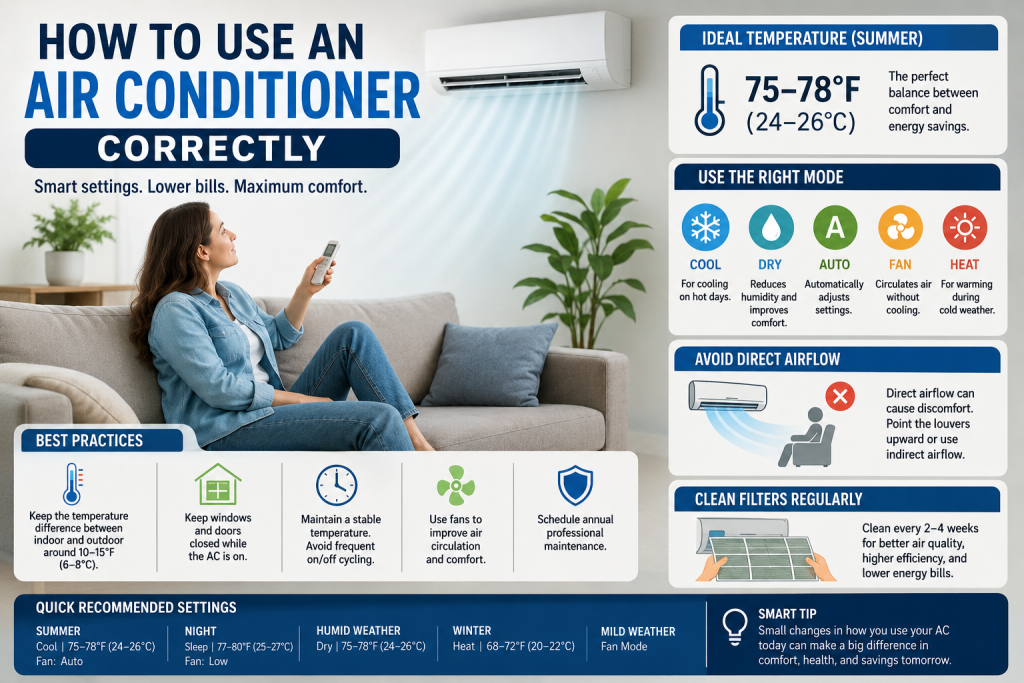
Quick Recommended Settings
Summer
Mode:
Cool
Temperature:
75–78°F (24–26°C)
Fan:
Auto
Humid Weather
Mode:
Dry
Temperature:
75–78°F (24–26°C)
Night
Mode:
Sleep
Temperature:
77–80°F (25–27°C)
Winter
Mode:
Heat
Temperature:
68–72°F (20–22°C)
Mild Weather
Mode:
Fan
Frequently Asked Questions
What is the best temperature for an air conditioner in summer?
Most experts recommend between 75°F and 78°F (24–26°C).
Does setting 60°F cool the room faster?
No.
The air conditioner cools at the same rate regardless of the selected temperature.
Is Dry Mode better than Cool Mode?
Dry Mode is better for reducing humidity.
Cool Mode is designed to lower room temperature.
Can I sleep with the air conditioner on?
Yes.
Use Sleep Mode with temperatures around 77–80°F (25–27°C).
How often should I clean AC filters?
Every 2–4 weeks during heavy use.
Why does my air conditioner smell bad?
Dirty filters, mold, or moisture inside the unit are common causes.
Professional cleaning may be necessary.
Is Auto Mode energy efficient?
It is convenient but not always the most efficient choice.
Cool Mode with proper temperature settings often provides better control.
Does Fan Mode cool the room?
No.
Fan Mode only circulates indoor air.
Should I leave my AC running all day?
Maintaining a stable temperature is generally more efficient than repeatedly turning the system on and off.
How long does an air conditioner typically last?
With proper maintenance, most systems last 10–15 years, and many high-quality units operate even longer.
Better Comfort and Lower Energy Bills
Using your air conditioner correctly is one of the easiest ways to improve comfort while reducing electricity costs.
Simple habits like choosing the right temperature, cleaning filters regularly, avoiding direct airflow, and scheduling annual maintenance help your system perform efficiently for many years.
Instead of forcing the AC to cool as quickly as possible, allow it to maintain a steady and comfortable indoor environment. Your home will feel better, your energy bills will stay lower, and your air conditioner will enjoy a much longer service life.
⚠️ Disclaimer and Source Hygiene
This article is intended for informational purposes only and should not replace professional advice from certified HVAC technicians or healthcare professionals. Recommendations are based on general HVAC best practices, manufacturer guidelines, and energy-efficiency recommendations. Always consult your air conditioner’s user manual for model-specific instructions.
🔔 For more tutorials like this, consider subscribing to our blog.
📩 Do you have questions or suggestions? Leave a comment or contact us!
🏷️ Tags: air conditioner, air conditioner settings, AC tips, cooling guide, HVAC, energy efficiency, home cooling, air conditioning maintenance, indoor comfort, electricity savings
📢 Hashtags: #AirConditioner #CoolingTips #HVAC #EnergyEfficiency #HomeComfort #AirConditioning #SaveEnergy #SummerTips #HomeMaintenance #SmartHome
Sources and References
- U.S. Department of Energy – Energy-saving recommendations for air conditioning.
- ENERGY STAR – Best practices for efficient home cooling.
- ASHRAE (American Society of Heating, Refrigerating and Air-Conditioning Engineers) – Thermal comfort guidelines.
- Major air conditioner manufacturers’ user manuals (Daikin, Mitsubishi Electric, LG, Samsung, Panasonic, Carrier).
Secondary Sources and Testimonials
This article incorporates common HVAC recommendations, homeowner experiences, and industry best practices regarding air conditioner efficiency, maintenance, indoor comfort, and energy savings.
