

⏲️ Estimated reading time: 7 min
Table of Contents
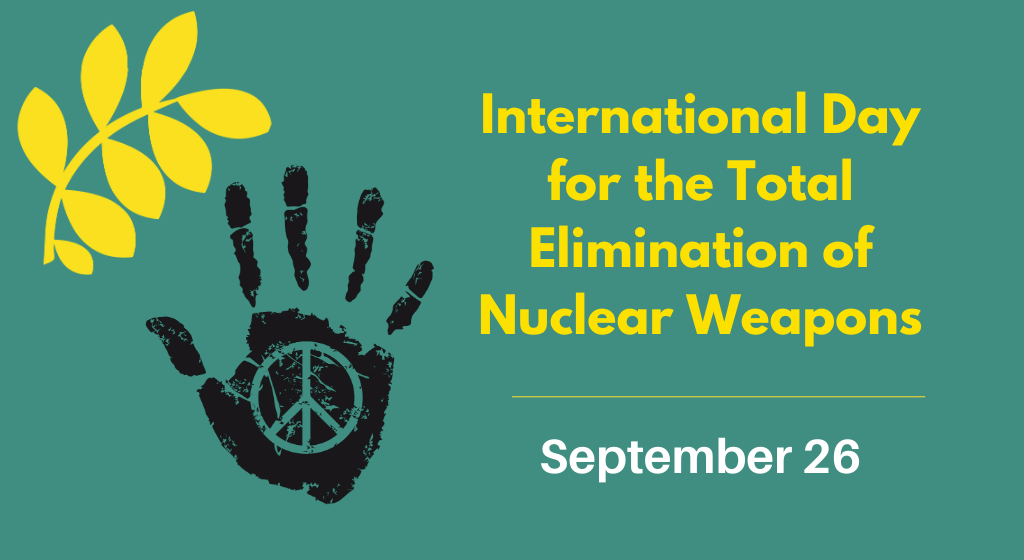
On September 26, 2026, the world will once again mark the International Day for the Total Elimination of Nuclear Weapons. Learn its history, importance, and how global action in disarmament shapes our shared future toward peace and security.
International Day for the Total Elimination of Nuclear Weapons 2026 (UN)
Total Elimination of Nuclear Weapons
As we approach September 26, 2026, the global community prepares to observe the International Day for the Total Elimination of Nuclear Weapons. This annual event, established by the United Nations in 2013, reminds us of the catastrophic threat posed by nuclear arms and the urgent need to abolish them permanently.
Even today, with technological advances in diplomacy and security, nuclear weapons remain one of the greatest dangers to human survival. By highlighting this day, the UN calls for progress in disarmament, stronger treaties, and global solidarity for peace.
Why This Day Matters in 2026
The world of 2026 faces numerous challenges: climate change, wars, pandemics, and economic instability. In such an environment, the existence of over 12,000 nuclear warheads worldwide remains a pressing threat.
This year’s observance emphasizes three themes:
- Urgency – The risk of nuclear use, intentional or accidental, is at its highest since the Cold War.
- Humanitarian consequences – Survivors of Hiroshima and Nagasaki continue to warn us of the devastating human cost.
- Moral responsibility – Humanity must decide whether to invest in weapons of mass destruction or in peace and sustainable development.
Historical Context
From 1945 to Today
The journey toward nuclear disarmament began in August 1945 with the atomic bombings of Hiroshima and Nagasaki. These events shocked the world and sparked decades of debate about the morality and necessity of nuclear weapons.
The Cold War Legacy
- In the 1980s, nuclear stockpiles peaked at 70,000 warheads.
- The concept of Mutually Assured Destruction (MAD) prevented direct conflict but created a fragile peace.
- Diplomatic breakthroughs like the Strategic Arms Reduction Treaty (START) showed that progress was possible.
Post-Cold War to Present
The Non-Proliferation Treaty (NPT), the Comprehensive Nuclear-Test-Ban Treaty (CTBT), and the Treaty on the Prohibition of Nuclear Weapons (TPNW) remain cornerstones of disarmament. However, major nuclear powers continue to modernize arsenals, highlighting the gap between rhetoric and action.
Why September 26?
The UN General Assembly chose this date for several reasons:
- It coincides with the annual UN General Debate, where world leaders gather in New York.
- It commemorates significant disarmament discussions and initiatives.
- It recalls September 26, 1983, when Soviet officer Stanislav Petrov prevented a false alarm from escalating into nuclear war.
Petrov’s decision to trust his instincts rather than launch retaliation reminds us how close humanity has come to disaster and how fragile security remains.
The Dangers of Nuclear Weapons in 2026
Humanitarian Risks
- A single nuclear explosion could instantly kill hundreds of thousands.
- Radiation would cause cancers, genetic mutations, and psychological trauma for generations.
- Emergency services would collapse, making recovery nearly impossible.
Environmental Consequences
- A nuclear winter could block sunlight and lower global temperatures.
- Crops would fail, leading to famine.
- Oceans, rivers, and soils would be contaminated for decades.
Political Tensions
- Ongoing rivalry between the United States and Russia continues to destabilize arms control.
- North Korea continues to test and develop nuclear capabilities.
- The India-Pakistan conflict remains a flashpoint with nuclear potential.
The Role of the United Nations in 2026
The UN leads international efforts by:
- Promoting dialogue between nuclear and non-nuclear states.
- Encouraging ratification of treaties like the TPNW and CTBT.
- Educating youth and civil society about nuclear risks.
- Organizing high-level events to maintain momentum toward disarmament.
In 2026, the UN highlights the need for accountability from states that have committed to arms reduction but continue investing in modernization.
Achievements and Challenges
Achievements
- Nuclear stockpiles have declined significantly since the Cold War.
- Over 120 countries support the TPNW.
- Survivors of Hiroshima and Nagasaki remain active in sharing their testimonies.
Challenges
- The five permanent UN Security Council members (USA, Russia, China, France, UK) have not joined the TPNW.
- Billions of dollars are spent annually on nuclear modernization programs.
- Growing distrust between states undermines multilateral diplomacy.
Civil Society and Global Movements
Disarmament is not only a government issue it requires people’s movements.
- ICAN (International Campaign to Abolish Nuclear Weapons), winner of the 2017 Nobel Peace Prize, continues to advocate strongly.
- Youth movements and universities host debates, campaigns, and art projects.
- Peace marches and vigils take place globally on September 26 to honor Hibakusha and victims of nuclear testing.
Moral, Ethical, and Spiritual Dimensions
The debate about nuclear weapons goes beyond politics and strategy. It touches on:
- Ethics: Is it acceptable to hold weapons that could end civilization?
- Religion and spirituality: Many faith traditions call for peace and the sanctity of life.
- Generational justice: Do we have the right to endanger future generations?
How to Participate in 2026
As an individual, you can make a difference:
- Learn and share educational resources on nuclear disarmament.
- Join or support NGOs such as ICAN, Greenpeace, or local peace groups.
- Raise awareness on social media using hashtags like #NuclearDisarmament and #September26.
- Attend or organize events in schools, universities, and communities.
- Write to political leaders and demand accountability for disarmament commitments.
Looking Ahead: A World Without Nuclear Weapons
The 2026 observance is not only about reflecting on dangers it is about envisioning possibilities. A nuclear-free world would mean:
- Redirection of resources toward health, education, and sustainable development.
- Stronger trust between nations, fostering global cooperation.
- Security based on diplomacy, not threats of mass destruction.
The International Day for the Total Elimination of Nuclear Weapons 2026 reminds us of a timeless truth: true security lies not in weapons but in peace.
Humanity has a choice continue down the path of destruction or work collectively toward survival and harmony. On September 26, 2026, let us reaffirm our commitment to ensuring that nuclear weapons belong to history, not the future.
⚠️ Disclaimer and Source Hygiene
This post is for informational and educational purposes only, commemorating the United Nations’ International Day for the Total Elimination of Nuclear Weapons (observed annually on September 26). It draws from publicly available sources, including official UN resolutions (e.g., A/RES/68/32), reports from organizations such as SIPRI, ICAN, and the Federation of American Scientists, historical records, and general knowledge of global disarmament efforts.
The content reflects widely reported facts and perspectives as of 2026 (e.g., global nuclear warhead estimates around 12,000–12,300 total, with ongoing modernization programs by nuclear-armed states). It does not constitute official UN statements, legal advice, policy recommendations, or professional expertise in international relations, security, or arms control.
Views expressed on the urgency of disarmament, humanitarian impacts, and related themes are aligned with the UN’s stated goals for this observance and advocacy by civil society groups, but remain subject to ongoing geopolitical developments, official updates, and differing national positions. No endorsement of any specific political stance, treaty ratification, or action is implied beyond promoting public awareness and dialogue.
Nuclear weapons data and geopolitical assessments can evolve; readers are encouraged to consult primary sources such as the United Nations Office for Disarmament Affairs (UNODA), the Treaty on the Prohibition of Nuclear Weapons (TPNW) site, or reputable research institutes for the most current information.
For questions, suggestions, or to engage further, feel free to comment or reach out.
This disclaimer ensures transparency, protects against misinterpretation, and aligns the post with the educational/spiritual/moral tone of your content while avoiding any unintended implications of bias or unsubstantiated claims. You can place it at the end (before tags/hashtags) or in a dedicated “Disclaimer and Sources” section as in your draft. If you’d like variations (shorter/longer, more formal, etc.), let me know!
🔔 For more tutorials like this, consider subscribing to our blog.
📩 Do you have questions or suggestions? Leave a comment or contact us!
🏷️ Tags: UN 2026, nuclear disarmament, nuclear weapons, International Day 2026, September 26, peace and security, Hiroshima Nagasaki, ICAN, Treaty on the Prohibition of Nuclear Weapons, Doomsday Clock
📢 Hashtags: #UN2026, #NuclearDisarmament, #GlobalPeace, #September26, #NuclearWeapons, #PeaceDay, #NoMoreHiroshima, #ICAN, #UnitedNations, #Disarmament
The observance in 2026 is not merely symbolic it is an opportunity for collective action. By uniting nations, organizations, and individuals, the world can move closer to eliminating the most dangerous weapons ever created. Peace is possible, but only if we demand it.
