


⏲️ Estimated reading time: 8 min
Table of Contents
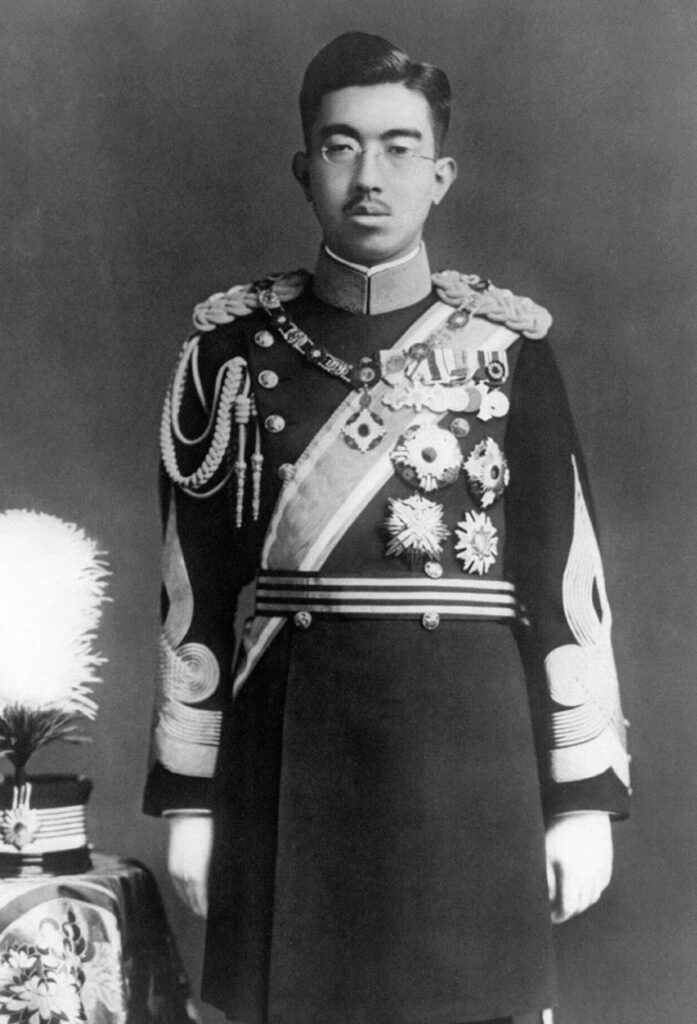
Hirohito – Japan’s Emperor Between Divinity, War, and Reconstruction. Hirohito, the longest-reigning emperor of Japan, ruled from 1926 to 1989 during one of the most turbulent periods in modern history. Seen as divine by many and deeply controversial for his wartime role, his legacy continues to shape debates about power, responsibility, and national identity.
Who Was Hirohito
Read also: OCE Fortnite Duos Grind in FNCS Division 1 Practice
Hirohito reigned as Emperor of Japan for 62 years, from 1926 until his death in 1989, marking the longest imperial reign in Japanese history. Outside Japan, he was known by his personal name, Hirohito, meaning “abundant benevolence.” Within Japan, he is remembered as Emperor Shōwa, a name associated with the era of “enlightened peace.”
His reign encompassed Japan’s dramatic transformation from an expanding imperial power to a defeated nation under occupation, and finally to a peaceful, economically powerful democracy.
Japan at the Dawn of Hirohito’s Reign
When Hirohito ascended to power, Japan was experiencing rising democratic aspirations alongside increasing political instability. Despite early signs of liberal reform, the nation soon turned toward ultranationalism and militarism.
The Imperial Army and Navy wielded extraordinary influence over government affairs. From 1900 onward, and especially between 1921 and 1944, military leaders held veto power over cabinet formation. Political violence became frequent, destabilizing civilian rule.
Childhood and Education of Hirohito
Hirohito was born in Tokyo on April 29, 1901, the eldest son of Crown Prince Yoshihito. His father became emperor when Hirohito was only eleven years old. Following imperial tradition, Hirohito was separated from his parents at an early age and raised under the supervision of retired Admiral Count Kawamura Sumiyoshi.
His education was strict and ideologically driven. He attended the Gakushuin Peers’ School and later the Special Institute for Crown Princes. Military training was provided by Admiral Heihachiro Togo, while nationalist scholars instilled moral, philosophical, and religious values rooted in the concept of a divine yet constitutional monarchy.
Crown Prince and First Encounters with the West
After the death of Emperor Meiji in 1912, Hirohito became heir to the throne and was formally invested as Crown Prince in 1916. In 1921, he undertook a six-month tour of Europe, visiting France, Italy, the Netherlands, Belgium, and the United Kingdom.
This journey made him the first member of the Japanese imperial family to travel abroad. The experience exposed him to Western constitutional monarchies and democratic institutions, leaving a lasting impression on his worldview.
Accession to Power and the Beginning of the Shōwa Era
Upon returning to Japan, Hirohito assumed the duties of head of state, as his father suffered from severe mental illness. After Emperor Yoshihito’s death in 1926, Hirohito officially ascended the throne on December 25.
This marked the beginning of the Shōwa era, often translated as “enlightened peace.” In 1928, a grand ceremony formally confirmed his accession, symbolized by the imperial regalia the sacred mirror, sword, and jewel passed down through centuries.
Personal Life and the Imperial Family
In 1924, Hirohito married Princess Nagako. Together, they had seven children: two sons and five daughters. Unlike many of his predecessors, Hirohito abandoned the tradition of imperial concubines, choosing to remain devoted to a single wife.
This decision reflected a shift toward modernization and alignment with contemporary values, both domestically and internationally.
Japan’s Descent into Militarism
The early years of Hirohito’s reign were marked by economic crisis and accelerated military expansion. The Imperial Army and Navy grew increasingly dominant, often acting independently of civilian authorities.
In 1931, the Manchurian Incident provided a pretext for Japan’s invasion of Manchuria, where a puppet state was established. From there, Japanese aggression expanded deeper into China, setting the stage for full-scale war.
War with China and the Nanjing Massacre
By 1937, Japan was fully engaged in war with China. One of the darkest chapters of this conflict was the Nanjing Massacre, during which approximately 200,000 civilians and prisoners of war were killed.
Although Hirohito reportedly did not approve of such atrocities, he neither punished those responsible nor publicly condemned the acts. Historians remain divided on whether this inaction stemmed from fear of the military or tacit acceptance.
World War II and the Axis Alliance
In September 1940, Japan signed the Tripartite Pact with Nazi Germany and Fascist Italy, agreeing to mutual support in case of attack by non-belligerent powers. That same month, Japanese forces occupied French Indochina.
The United States responded with severe economic sanctions, including embargoes on oil and steel. Facing dwindling resources, Japan moved closer to war.
The Attack on Pearl Harbor
On December 7, 1941, Japanese aircraft launched a surprise attack on the U.S. naval base at Pearl Harbor, near Honolulu, Hawaii. Eighteen ships were destroyed, and nearly 2,500 American servicemen were killed.
The following day, the United States declared war on Japan. Although Hirohito reportedly harbored reservations about war, he approved the government’s decision and publicly supported the military effort.
Military Decline and Japan’s Defeat
After early victories across Southeast Asia and the Pacific, Japan’s fortunes reversed. The Battle of Midway and subsequent defeats at Guadalcanal marked turning points in the Pacific War.
By mid-1944, Japanese leaders acknowledged that victory was unlikely. However, fighting continued until the atomic bombings of Hiroshima and Nagasaki in August 1945.
Surrender and the Historic Radio Broadcast
Following the atomic attacks, Hirohito intervened decisively. On August 15, 1945, he addressed the Japanese people via radio, urging them to “endure the unendurable” and accept surrender.
This broadcast marked the first time ordinary Japanese citizens heard their emperor’s voice, symbolizing the end of the war and the beginning of a new national chapter.
Occupation and the Role of Douglas MacArthur
Some Allied leaders sought to prosecute Hirohito as a war criminal. However, General Douglas MacArthur, Supreme Commander of the Allied Powers, believed that retaining the emperor would ease Japan’s transition to democracy.
Hirohito remained on the throne, while military leaders were tried and convicted. He formally renounced his divine status, declaring himself human an unprecedented act in Japanese history.
Postwar Japan and National Reconstruction
During the Allied occupation, real power rested with MacArthur and the occupation authorities. Sweeping democratic reforms were introduced, and Japan’s political and social systems were transformed.
Hirohito traveled extensively throughout Japan, encouraging recovery and rebuilding public trust in the imperial institution. He also represented Japan abroad, helping to restore its international standing.
Scientific Interests and Marine Biology
Beyond politics, Hirohito was deeply interested in marine biology. He published numerous scientific papers and gained respect within academic circles for his research.
This intellectual pursuit contributed to a more humanized image of the emperor in the postwar era.
Death and Succession
Hirohito died of cancer on January 7, 1989, at the Imperial Palace in Tokyo. He was succeeded by his son, Akihito.
His 62-year reign remains the longest in Japan’s imperial history, spanning war, defeat, recovery, and economic triumph.
A Legacy Still Debated
Hirohito’s role during World War II remains one of history’s most contested subjects. Was he an active decision-maker or a figurehead constrained by military dominance?
While opinions differ, his impact on Japan and the world is undeniable. He remains a symbol of both tragedy and transformation.
Frequently Asked Questions
Did Hirohito have real power during World War II?
Historians disagree. Some argue he influenced key decisions, while others see him as dominated by military leaders.
Why was Hirohito not tried as a war criminal?
The United States believed retaining him would ensure stability and facilitate democratic reforms.
What did renouncing his divinity mean?
It marked a historic break, redefining the emperor as human rather than divine.
How long did Hirohito reign?
He ruled for 62 years, from 1926 to 1989.
Who succeeded him?
His son, Akihito, became emperor after his death.
Did Hirohito support the Pearl Harbor attack?
He approved the government’s decision, despite reported reservations.
What role did he play after the war?
He became a symbol of continuity and supported democratic reforms.
What were his personal interests?
He was passionate about marine biology and scientific research.
Between Shadow and Light
Hirohito remains one of the most complex figures of the twentieth century. Standing between divinity and humanity, war and peace, his life mirrors Japan’s own dramatic journey through modern history.
⚠️ DISCLAIMER
This article is intended for informational purposes and is based on historical research and reputable academic sources. For deeper analysis, readers are encouraged to consult specialized historical studies.
🔔 For more tutorials like this, consider subscribing to our blog.
📩 Do you have questions or suggestions? Leave a comment or contact us!
🏷️ Tags: Hirohito, Emperor of Japan, Shōwa era, World War II, Pearl Harbor, Imperial Japan, Japanese history, MacArthur, postwar reconstruction
📢 Hashtags: #Hirohito #JapaneseHistory #ShowaEra #WorldWarII #PearlHarbor #Japan #ImperialJapan #MacArthur #Tokyo #History
