


⏲️ Estimated reading time: 7 min
Table of Contents
On December 26, 2004, a massive 9.1-magnitude earthquake in the Indian Ocean triggered one of the deadliest tsunamis in recorded history. More than 227,000 people lost their lives across multiple continents, permanently changing global disaster preparedness and early warning systems.
The 2004 Indian Ocean Earthquake and Tsunami: The Catastrophe That Changed the World
Read also: Camp Nou Inauguration
The morning of December 26, 2004, began quietly for millions of people across South and Southeast Asia. It was the second day of Christmas celebrations. Tourist resorts were full. Fishermen were heading out to sea. Children were playing along the beaches. No one suspected that deep beneath the Indian Ocean, one of the most powerful geological events in modern history was about to unfold.
Within minutes, calm turned into chaos. A colossal earthquake violently shifted the ocean floor, transforming the sea into a weapon of mass destruction. The resulting tsunami traveled thousands of kilometers, striking dozens of countries and leaving behind death, devastation, and long-lasting trauma.
This article offers an in-depth analysis of the disaster, exploring its geological causes, timeline, human and economic impact, environmental consequences, and the critical lessons that reshaped global disaster prevention forever.
Geological background: why such a disaster was possible
The tectonic plates involved
The earthquake occurred in one of the most seismically active regions on Earth. Here, the Indo-Australian Plate is slowly sliding beneath the Eurasian Plate in a process known as subduction. Over centuries, this movement builds enormous tension along the fault line.
When that tension is suddenly released, the result is a massive earthquake.
The earthquake’s epicenter
The epicenter was located off the western coast of Sumatra, near the Indonesian province of Aceh. This area suffered the most severe human losses.
Key characteristics:
- Magnitude: 9.1–9.3
- Duration: 8–10 minutes
- Vertical displacement of the seafloor: up to 15 meters
- Energy released: equivalent to over 1,500 Hiroshima-type atomic bombs
The birth of the tsunami: when water becomes destruction
Not all undersea earthquakes generate tsunamis. What made the 2004 event exceptional was the massive vertical displacement of the ocean floor. Millions of tons of seawater were lifted almost instantly, generating waves of extraordinary power.
How a tsunami travels
- In deep ocean waters, waves may be only a few meters high
- Speeds can reach 700–800 km/h
- As waves approach shallow coastal areas, they slow down and increase dramatically in height
In some locations, waves exceeded 30 meters, obliterating entire coastal communities.
The first minutes: no warning and total chaos
In 2004, the Indian Ocean had no tsunami warning system. Although seismologists around the world detected the earthquake almost immediately, the information never reached coastal populations in time.
Warning signs that went unrecognized
- Sudden retreat of the sea
- Fish stranded on exposed seabeds
- Strange roaring sounds from the ocean
Many people walked toward the shoreline, unaware that they were approaching imminent danger.
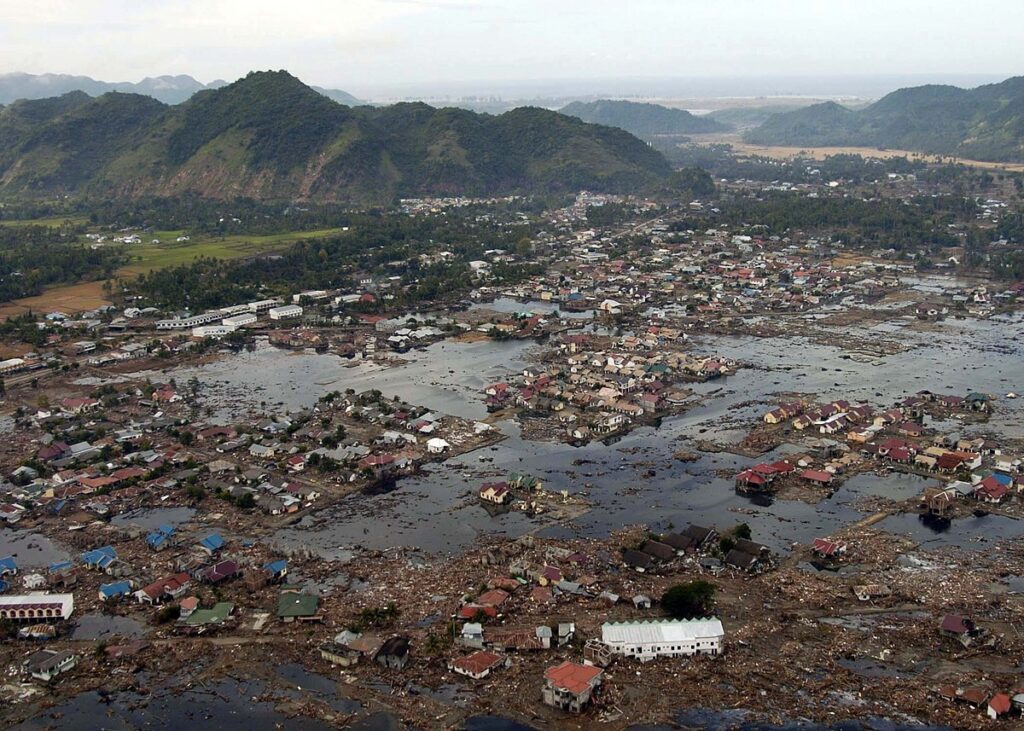
Countries struck by the disaster
Indonesia: the heart of the tragedy
Indonesia suffered the highest death toll, with more than 170,000 fatalities. The province of Aceh was devastated almost beyond recognition.
Entire towns vanished. Communities were erased. Many survivors never found the bodies of their loved ones.
Sri Lanka and India
In Sri Lanka, the tsunami penetrated deep inland. A passenger train was struck directly, becoming one of the deadliest railway disasters in history.
In India, coastal states were overwhelmed, and thousands of fishing villages were destroyed.
Thailand and the Maldives
Thailand was heavily affected, especially in tourist regions. Thousands of foreign visitors were among the victims, turning the disaster into a global shock.
In the Maldives, where the average elevation is only a few meters above sea level, nearly the entire nation was flooded.
East Africa
Even Somalia was struck by tsunami waves, despite being over 4,500 kilometers from the epicenter.
Human toll: numbers that cannot express the pain
- Over 227,000 deaths
- Approximately 1.7 million people displaced
- Tens of thousands of orphaned children
- Hundreds of thousands injured
Beyond the statistics lay profound psychological trauma, much of which persists to this day.
Economic and social impact
Material destruction
- More than one million homes destroyed
- Ports, roads, and bridges wiped out
- Economic losses estimated at 14–15 billion USD
Social consequences
- Large-scale population displacement
- Increased risk of disease outbreaks
- Severe food insecurity in affected regions
Environmental impact: nature wounded
- Coral reefs destroyed
- Mangrove forests wiped out
- Coastal waters contaminated with fuel and debris
- Permanent alterations to coastlines and ecosystems
International response: unprecedented global solidarity
The catastrophe triggered one of the largest humanitarian responses in history. Governments, NGOs, the United Nations, and millions of individuals mobilized aid and resources.
Direct outcomes included:
- The creation of the Indian Ocean Tsunami Warning System
- Massive investment in public education
- Improved international coordination and data sharing
- Faster disaster response protocols worldwide
Lessons learned from the 2004 disaster
- Early warning systems save lives
- Public education is critical
- Natural forces cannot be controlled, but they can be understood
- Global cooperation is essential in disaster preparedness
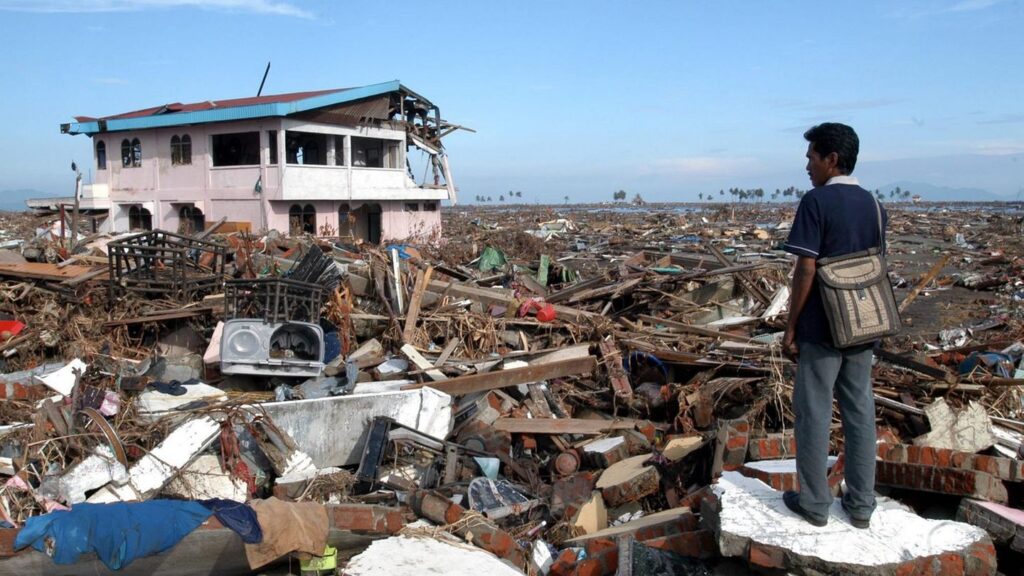
A painful but necessary legacy
The 2004 Indian Ocean tsunami is not merely a tragedy of the past. It remains a permanent warning. Without this catastrophe, many of today’s life-saving systems might never have existed.
Remembering the victims is not only an act of respect, but a responsibility toward future generations.
Frequently Asked Questions
What magnitude was the 2004 earthquake?
The earthquake measured between 9.1 and 9.3, making it one of the strongest ever recorded.
Why was the tsunami so destructive?
Because of the massive vertical displacement of the seafloor and the absence of early warning systems.
How many countries were affected?
More than 14 countries across Asia and Africa.
Was there any warning before the tsunami?
No. The Indian Ocean lacked a tsunami alert system at the time.
Which country suffered the most?
Indonesia, particularly the Aceh province.
Was this the deadliest tsunami in history?
Yes, it is considered the deadliest tsunami ever documented.
What changed after 2004?
Modern tsunami warning systems, improved disaster education, and stronger international cooperation.
Could such an event happen again?
Yes. From a geological perspective, it remains possible.
Final reflections that must not be forgotten
The Indian Ocean tsunami revealed how fragile modern civilization can be in the face of nature’s power. It was a global tragedy, but also a turning point. The memory of those lost must endure not only as remembrance, but as a lesson for the future.
⚠️ DISCLAIMER
This article is for informational and educational purposes only. The information is based on reports from the United Nations, international seismological institutes, and reputable scientific publications. For academic or professional use, consult official sources and qualified experts.
🔔 For more tutorials like this, consider subscribing to our blog.
📩 Do you have questions or suggestions? Leave a comment or contact us!
🏷️ Tags: Indian Ocean tsunami, 2004 tsunami, massive earthquake, natural disasters, tsunami Sumatra, 9.1 earthquake, global catastrophe, seismology, disaster prevention, tsunami warning systems
📢 Hashtags: #IndianOceanTsunami, #Tsunami2004, #Earthquake, #NaturalDisasters, #GlobalHistory, #DisasterPrevention, #Seismology, #Humanity, #NeverForget, #PlanetEarth
