


⏲️ Estimated reading time: 7 min
Table of Contents
In today’s rapidly changing battlefield, missile technology is advancing faster than defense systems can adapt. Hypersonic glide vehicles, air-launched ballistic missiles, and super-heavy ICBMs are redefining deterrence. This article explores the top five missiles regarded as nearly impossible to intercept: Russia’s Avangard, China’s DF-17, the Zircon cruise missile, the Kinzhal, and the mighty RS-28 Sarmat. By understanding their speed, flight profiles, and payloads, we reveal why these weapons represent the future of modern warfare and why the global defense community is struggling to catch up.
Top 5
History has always been a contest between weapons and defenses. Castles once resisted siege engines, only to fall before cannons. Battleships once ruled the seas, until aircraft carriers proved superior. Today, the same cycle continues between missiles and anti-missile systems.
However, in the 21st century, offense is clearly outpacing defense. While countries continue to invest billions in interception technologies, hypersonic missiles and advanced ICBMs are designed to bypass them completely. These weapons are not only faster but also more unpredictable, giving defenders almost no reaction time.
As a result, several systems are now considered nearly impossible to intercept. In this article, we explore the top five missiles that challenge the limits of modern defenses: Avangard, DF-17, Zircon, Kinzhal, and Sarmat.
1. Avangard – Russia’s Hypersonic Glide Vehicle
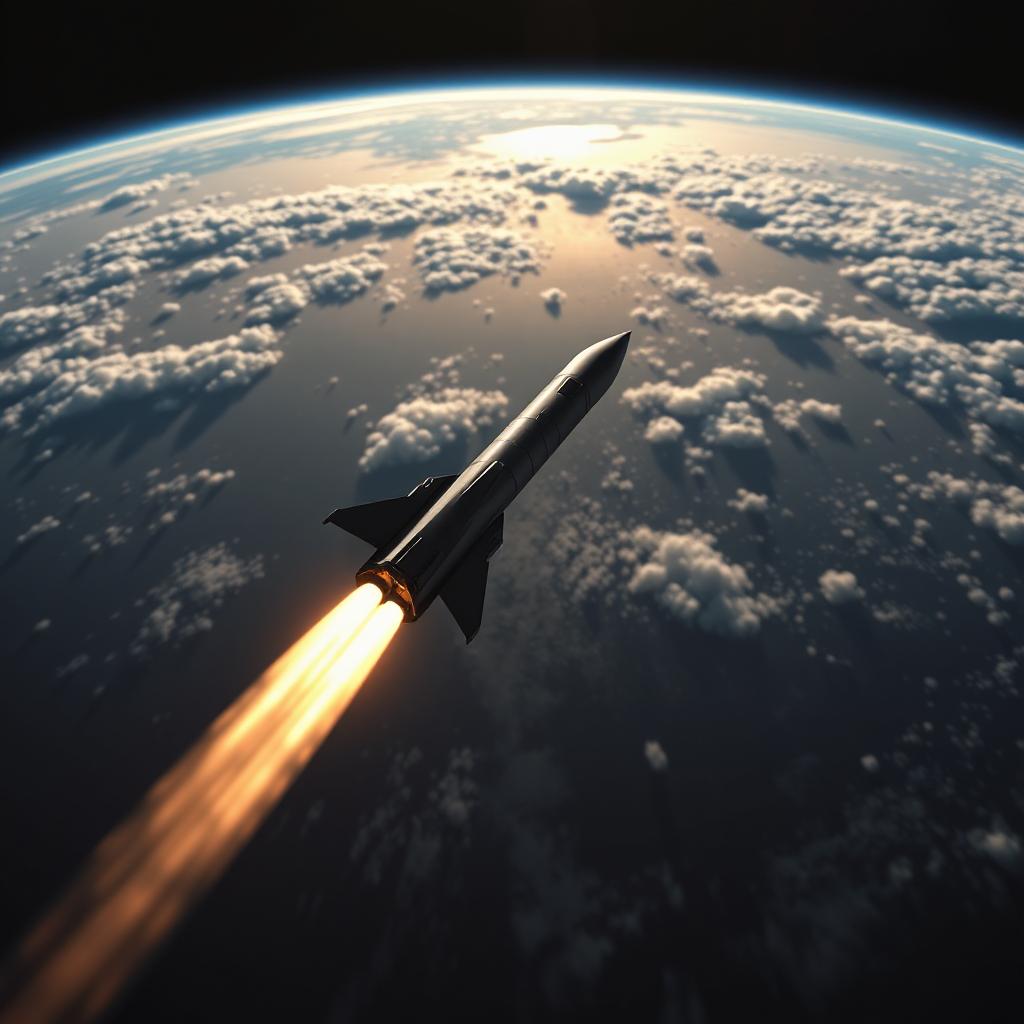
The Avangard is perhaps the best-known example of a hypersonic glide vehicle (HGV). First revealed by Russia in 2018, it was described as capable of traveling at up to Mach 20 while maneuvering unpredictably in the upper atmosphere.
Key Features:
- Speed: Up to Mach 20 (~24,700 km/h)
- Trajectory: Glides through the atmosphere after separation from its ICBM booster
- Payload: Nuclear, reportedly up to 2 megatons
- Maneuverability: Can change course and altitude mid-flight
Why It’s Hard to Intercept
Traditional missile defenses, such as the U.S. Ground-Based Midcourse Defense (GMD), depend on predicting a ballistic trajectory. Avangard breaks this predictability by gliding at lower altitudes while maneuvering sharply.
Therefore, defenders must deal with shorter detection windows and far more complicated interception calculations. In practice, this makes Avangard virtually unstoppable with current technologies.
2. DF-17 with DF-ZF Glide Vehicle – China’s Hypersonic Leap
China has also entered the hypersonic race with the DF-17, a medium-range missile carrying the DF-ZF glide vehicle. It was first showcased during the 2019 Beijing military parade and has since become a cornerstone of China’s deterrence.
Key Features:
- Range: 1,800–2,500 km
- Speed: Mach 5–10
- Payload: Nuclear or conventional
- Deployment: Mobile launchers, enhancing survivability
Why It’s Hard to Intercept
The DF-17 operates in the altitude gap between systems designed for low-flying cruise missiles and high-arching ballistic missiles. Consequently, it slips past the reach of both short-range and long-range interceptors.
In addition, its maneuverability allows it to strike naval fleets and island bases with little warning. For this reason, many analysts describe it as a “carrier group killer” within the Western Pacific.
3. 3M22 Zircon – Russia’s Hypersonic Cruise Missile
The 3M22 Zircon is a hypersonic cruise missile launched from ships and submarines. Unlike ballistic missiles that arc through space, Zircon stays within the atmosphere, powered by a scramjet engine.
Key Features:
- Speed: Mach 8–9
- Range: Around 1,000 km
- Launch Platforms: Frigates, submarines, coastal batteries
- Flight Profile: Low-altitude, sea-skimming trajectory
Why It’s Hard to Intercept
At Mach 9, Zircon can cover one kilometer in just 0.3 seconds. As a result, defenders have virtually no time to react once it is detected.
Furthermore, its low-altitude sea-skimming profile reduces radar visibility, meaning it may only appear on sensors seconds before impact. Therefore, Zircon is widely described as a “carrier killer” capable of changing naval balance.
4. Kh-47M2 Kinzhal – The Air-Launched “Dagger”
The Kinzhal is an air-launched hypersonic missile based on the Iskander short-range ballistic missile. When launched from aircraft such as the MiG-31K, it can reach speeds of up to Mach 10.
Key Features:
- Speed: Mach 10
- Range: 1,500–2,000 km
- Launch Platforms: MiG-31K interceptors, Tu-22M3 bombers
- Payload: Nuclear or conventional
Why It’s Hard to Intercept
The air-launch feature gives Kinzhal a flexible and unpredictable deployment profile. Defenders may not even know an attack is underway until the missile is already in flight.
In addition, its hypersonic terminal speed means intercepting it is only possible in the final seconds. Although some Kinzhals were reportedly intercepted by Patriot systems in Ukraine, such cases remain rare and difficult to replicate.
5. RS-28 Sarmat – Russia’s “Satan II” ICBM
The RS-28 Sarmat is Russia’s newest super-heavy intercontinental ballistic missile, replacing the R-36M. With an enormous payload capacity, it embodies overwhelming offensive power.
Key Features:
- Range: More than 18,000 km
- Payload: 10 heavy or up to 15 lighter MIRVs
- Special Capability: Can carry Avangard glide vehicles
- Trajectory: Can approach via the South Pole to bypass defenses
Why It’s Hard to Intercept
The Sarmat’s ability to release multiple warheads and decoys at once overwhelms defensive systems. Even if a few are intercepted, many will still reach their targets.
Moreover, its unconventional trajectories make early detection unreliable. Therefore, no current defense system can guarantee protection against Sarmat.
Why Hypersonic Missiles Matter
Hypersonic weapons change the very nature of warfare. They are not just faster versions of older systems; instead, they combine:
- Unprecedented Speed: Mach 5 or higher reduces reaction time to seconds.
- Maneuverability: Mid-flight changes defeat predictive software.
- Altitude Profiles: Flying too high for short-range interceptors yet too low for long-range defenses.
- Payload Flexibility: Capable of delivering either nuclear or conventional strikes.
In conclusion, hypersonics tilt the balance toward offense, making traditional defenses unreliable.
Can They Ever Be Intercepted?
Although these missiles are often described as unstoppable, interception is not impossible. For instance, in 2023 Ukraine claimed to intercept several Kinzhal missiles using Patriot batteries.
However, such successes are the exception, not the rule. They require perfect coordination, advanced radars, and favorable conditions. Therefore, most hypersonics remain effectively unstoppable in real-world scenarios.
Nevertheless, new technologies are under development, including:
- Space-based infrared sensors for earlier detection
- Glide Phase Interceptors (GPI) tailored for hypersonics
- Directed-energy weapons like high-power lasers
- AI-driven radar networks for faster response times
As a result, the arms race is far from over. Defense may catch up, but for now hypersonics hold the advantage.
Final Thoughts
The Avangard, DF-17, Zircon, Kinzhal, and Sarmat highlight the future of military strategy. They are not invincible, yet they exploit weaknesses in existing defenses so effectively that interception is nearly impossible.
Therefore, we are witnessing the dawn of a new era in warfare an age where speed, unpredictability, and overwhelming firepower dominate. The global balance of power is no longer determined by how many weapons a country has, but by whether those weapons can actually be stopped.
📌 FAQ – Top 5 Missiles That Cannot Be Intercepted
See also: Why You Should Photograph Your Hotel Room Before Checkout
Q1: What makes hypersonic missiles so hard to intercept?
A: Their extreme speed, unpredictable trajectories, and low-altitude profiles reduce reaction times and complicate tracking, making interception nearly impossible.
Q2: Which countries have hypersonic missiles?
A: Russia currently fields Avangard, Zircon, Kinzhal, and Sarmat. China deploys the DF-17. The United States is actively testing systems like ARRW and HAWC.
Q3: Have hypersonic missiles ever been intercepted?
A: Yes, Ukraine claimed to intercept Russia’s Kinzhal with Patriot systems in 2023. However, such cases remain very rare.
Q4: Can missile defense evolve to stop hypersonics?
A: Yes, projects like Glide Phase Interceptors, space-based sensors, and laser weapons are under development specifically to counter hypersonics.
Q5: Are these missiles only nuclear?
A: No, many can carry conventional warheads as well, making them versatile for both strategic and tactical missions.
🔔 For more tutorials like this, consider subscribing to our blog.
📩 Do you have questions or suggestions? Leave a comment or contact us!
🏷️ Tags: missiles, hypersonic weapons, Avangard, DF-17, Zircon, Kinzhal, Sarmat, military technology, ICBM, defense systems, modern warfare
📢 Hashtags: #Missiles, #Hypersonic, #MilitaryTech, #Avangard, #Zircon, #Kinzhal, #Sarmat, #ICBM, #Defense, #Warfare
